A well-organized wardrobe should make daily dressing easier, not turn your bedroom into a showroom. In 2026, the Best Ways To Organize A Clothing Wardrobe will focus on visibility, flexibility, and realistic maintenance. People are choosing systems that fit smaller spaces, changing routines, and more thoughtful buying habits. A wardrobe should serve real life. Not an imaginary one.
Professional organizer Marie Kondo offers a useful principle: “The objective of cleaning is not just to clean, but to feel happiness living within that environment.” Her approach encourages people to keep clothing that supports their present lifestyle. This guide applies that idea through practical methods, including category sorting, vertical folding, seasonal rotation, and clear storage zones. A linen shirt can hang beside workwear, while winter knitwear rests in a labeled fabric box. Small details matter.
Still, no organizing method remains perfect forever. A rushed morning can leave jeans on a chair. Laundry can quietly rebuild the clutter. That is normal. The goal is not flawless control, but a system that recovers quickly. Each section will examine space-saving tools, color and category grouping, wardrobe editing, and maintenance habits for 2026. It will also consider common mistakes, such as storing rarely worn clothes in prime locations or buying containers before measuring shelves. Better organization begins with observation. What do you actually wear? What remains untouched for months? Honest answers create a wardrobe that feels calmer, more useful, and easier to maintain.
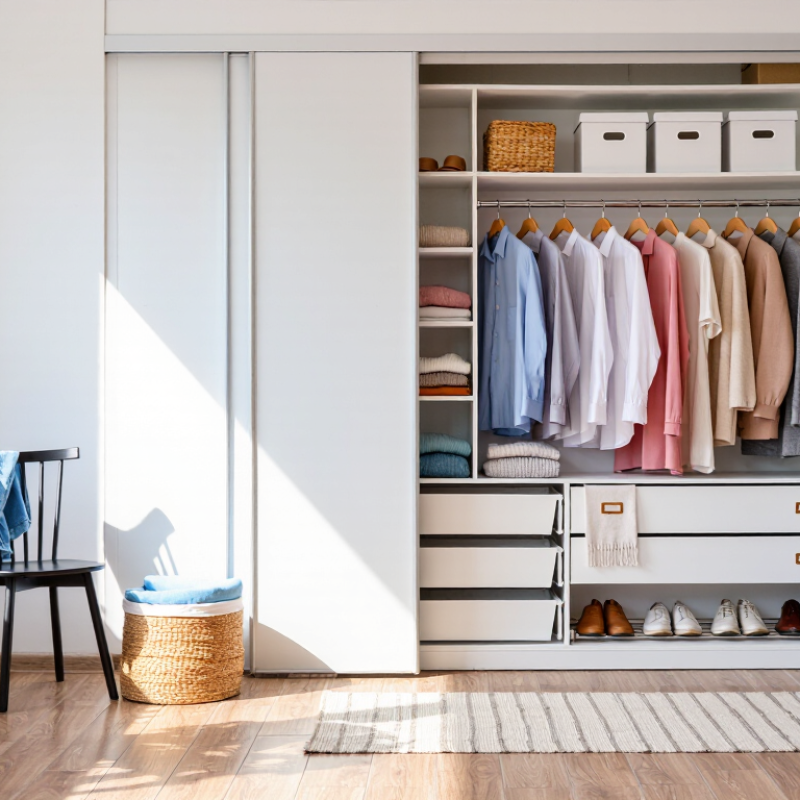
A well-organized wardrobe in 2026 should begin with an honest assessment. Remove every item and place clothing on the bed or floor. Check each piece for fit, damage, comfort, and recent use. A shirt with a loose button may need repair, not immediate disposal. However, keeping ten “someday” outfits can quietly consume valuable space. I learned this after finding unworn clothes behind winter sweaters.
Define your organization goals before buying storage products. Do you need faster workday dressing, clearer seasonal storage, or easier outfit planning? Your answer should shape the system. Group clothing by purpose, such as work, exercise, home, and special events. Then arrange each group by garment type or color. Keep frequently worn pieces at eye level. Store occasional items higher or farther back. Leave a little empty space. Overfilling makes even a careful system difficult to maintain.
Tips
Photograph outfits you wear often. Keep a small repair basket nearby. Review your wardrobe every three months. Use one simple rule: if an item feels wrong repeatedly, question its place. My own system still needs adjustment. Some categories remain too broad, and folding methods are not always practical. That is useful feedback, not failure. Track what you actually reach for, then change the arrangement around real habits.
A 2026 wardrobe should reflect how clothes are actually used, not how neatly they look in photos. I divide mine into work, home, exercise, events, and outdoor layers. Each category gets one shelf or drawer. This keeps a black shirt from disappearing under rarely worn formalwear. WRAP’s Valuing Our Clothes report found that extending a garment’s active life by nine months can reduce its carbon, water, and waste footprints by 20–30%. Better visibility can support that longer life.
Seasonal sorting prevents crowded rails. I keep lightweight shirts and sandals within reach during warm months, while coats and knitwear move to labeled storage boxes. I leave a small transition section for unpredictable weather. It is not perfectly tidy. Real life rarely is. Check fabric condition before storing anything, and use breathable covers for delicate pieces. Plastic bags can trap moisture.
Frequency matters more than category alone. Daily items belong between waist and eye level; occasional pieces can sit higher. I also separate “love wearing,” “useful,” and “needs reconsidering.” Personal preference should guide the final layout. Color grouping helps some people, but it can hide practical differences between work and leisure clothes. A 2023 report from the U.S. Environmental Protection Agency estimated that millions of tons of textiles enter the municipal waste stream each year. A clearer wardrobe may reduce impulse replacements, though organization alone cannot solve overconsumption. I still keep a few clothes I rarely wear. That is something to review, not pretend away.
| Organization Method | Best Clothing Examples | Recommended Storage Location | Storage Format | Access Frequency | Seasonal Guidance | Personal Preference Rule |
|---|---|---|---|---|---|---|
| Daily Use | T-shirts, work shirts, trousers, everyday dresses, and comfortable shoes | Eye-level shelves, the front half of the closet, or the top drawers | Fold soft items by category; hang garments that crease easily | Daily or several times per week | Keep current-season items easiest to reach | Place the most-worn colors and silhouettes closest to the dressing area |
| Work and Formal Wear | Blazers, tailored trousers, suits, formal shirts, skirts, and occasion dresses | A dedicated hanging section with enough vertical space | Hang structured or wrinkle-prone garments; use matching hangers | Several times per week to a few times per year | Separate warm-weather and cold-weather work layers when space is limited | Arrange by outfit or color if complete combinations save time |
| Home and Lounge Wear | Sleepwear, robes, soft shorts, leggings, and relaxed tops | A lower drawer, labeled basket, or accessible shelf | Fold or roll by item type to make pairs and sets visible | Daily or most evenings | Store heavier sleepwear separately from lightweight summer pieces | Keep favorite comfortable sets in the easiest-to-reach section |
| Activewear | Sports tops, training bottoms, swimwear, base layers, and athletic socks | A ventilated drawer, open bin, or shelf near changing space | Fold or roll; allow damp items to dry fully before storage | Several times per week or seasonally | Keep weather-specific layers with the current exercise equipment | Sort by activity, such as indoor training, outdoor exercise, or swimming |
| Outerwear and Layering | Coats, jackets, cardigans, sweaters, vests, and rainwear | Sturdy hanging rail, entryway hooks, or upper closet section | Hang coats and jackets; fold heavy knits to reduce shoulder stretching | Daily in the relevant weather; occasional otherwise | Rotate by temperature and weather; clean and dry items before long-term storage | Group by warmth level for faster outfit planning |
| Seasonal Rotation | Heavy knitwear, thermal layers, linen clothing, sandals, gloves, and scarves | Upper shelves, under-bed containers, or a separate storage cabinet | Use breathable containers; fold items clean and completely dry | A few times per year | Rotate at the start of a sustained weather change rather than after one unusual day | Keep a small transition capsule accessible during changing weather |
| Low-Frequency and Occasion Wear | Celebration outfits, travel-specific clothing, costumes, and specialty accessories | Clearly labeled upper shelves or a protected secondary wardrobe | Hang delicate structured pieces; fold durable items with protective layers | Monthly to annually | Review before holidays, travel periods, and formal events | Store by event type, outfit, or emotional importance |
| Color and Outfit Coordination | Clothing already selected for a capsule wardrobe or repeat outfit combinations | The main visible rail or the front section of drawers | Arrange by outfit first, then by color or garment type | Daily planning and weekly outfit selection | Build separate warm-weather, cold-weather, and transition groupings | Choose color order, outfit order, or garment order based on what feels fastest |
| Laundry and Rewear System | Items worn briefly but not ready for washing, such as jeans or light layers | A designated airing hook, valet rail, or small rewear basket | Keep separate from both clean clothing and the laundry hamper | Used between wears when appropriate | Air garments thoroughly, especially in warm or humid conditions | Set a personal limit for rewear items to prevent clutter |
| Edit and Review | Items that no longer fit, need repair, are unworn, or duplicate other pieces | A temporary review box outside the daily wardrobe area | Sort into keep, repair, donate, recycle, or decide-later groups | Review monthly or at each seasonal rotation | Perform a larger edit when switching seasonal clothing | Keep items that fit, function, and support the wearer’s current lifestyle |
Practical rule: organize first by how clothing is used, then refine the layout by season, access frequency, and personal preference. Keep clothing clean and fully dry before placing it in long-term storage.
Choose a storage system that fits your room, not a picture-perfect closet. Measure wall width, ceiling height, and walking space before buying anything. After reorganizing small bedrooms, I have found that shallow drawers often outperform deep shelves. They keep folded shirts visible and reduce forgotten piles. Use hanging rails for dresses, jackets, and delicate fabrics. Store knitwear flat because hangers can stretch the shoulders. Leave a little air between garments. Crowded clothing wrinkles faster and becomes harder to inspect.
Tips: Sort clothes by type and frequency. Keep daily items between waist and eye level. Place seasonal pieces in labeled, breathable containers. Avoid heavy boxes on high shelves. Check damp corners regularly, especially in humid rooms. A simple moisture check can protect wool, cotton, and leather-like materials.
Flexible systems work best when clothing needs change. Adjustable shelves suit mixed wardrobes, while drawer units help smaller items stay contained. Under-bed storage can hold coats, but measure clearance first. A narrow vertical rack may solve a cramped entryway without blocking movement. I once stored rarely worn trousers too high and forgot them for months. That mistake changed my system: visibility matters as much as capacity. Review the wardrobe every few months, then adjust one section at a time. Perfect organization is rarely permanent.
A useful wardrobe starts with clear sections, not perfect matching hangers. Group clothes by purpose: workwear, casual pieces, exercise gear, and special-occasion items. Within each group, arrange garments by type, then by color if that helps you choose quickly. Keep frequently worn clothes between waist and eye level. Store seasonal coats or rarely used bags on higher shelves, but avoid stacking heavy items where they could fall. Leave a little space between hangers. A crowded rail makes even clean clothes harder to see.
Labels help when shelves or bins look alike. Use short, specific words such as “T-shirts,” “Belts,” or “Winter scarves.” Place labels where you can read them without moving other items. For drawers, simple dividers can keep socks and undergarments from becoming one mixed pile. Check the system every few weeks, returning misplaced items and setting aside clothes that need repair or washing. A small laundry basket nearby can prevent worn clothes from landing on the floor. Still, routines slip. Mine do, especially during busy weeks. Adjust the sections when your habits change; a wardrobe should support real mornings, not an idealized routine. If a label no longer matches what you store, change it. A quick monthly review is often enough.
A wardrobe that worked in January may feel crowded by July. Review it every few months, not just during a major seasonal cleanout. Pull out a few frequently worn items and notice what is missing, hard to reach, or repeatedly pushed aside. Keep a simple note on your phone. Small observations are useful.
Adjust the setup to match your actual routine. If work clothes gather on a chair, place everyday outfits at eye level and add a basket for items worn once but not ready to wash. Move bulky sweaters to a higher shelf when the weather warms, but leave one within reach for cool evenings. Try changes for two weeks before buying storage containers. The first arrangement may not stick. That is normal.
Check whether your categories still make sense. Sorting by clothing type can help, while grouping complete outfits may suit a rushed morning better. Use what you reach for most as your guide, rather than an idealized picture of a perfect closet. If a shelf becomes a jumble again, adjust its height or reduce what it holds. Be honest about the system. It may be the problem, not your habits.
Review your organization system and adapt it throughout 2026.
Suggested planning intervals, not survey results: check frequently used items monthly, reassess seasonal storage every three months, and review fit and donation decisions twice a year. Adjust the schedule to your climate, clothing needs, and available space.
Remove every item and place it on the bed or floor. Check fit, damage, comfort, and recent use. A loose button may need repair. Keep fewer “someday” outfits.
Decide whether you need faster workday dressing, clearer seasonal storage, or easier outfit planning. Group clothes by purpose. Keep daily items near eye level. Your goal should guide storage choices.
Use hanging rails for dresses, jackets, and delicate fabrics. Fold knitwear flat to protect the shoulders. Shallow drawers can keep shirts visible. Leave air between garments.
Measure wall width, ceiling height, and walking space first. Use narrow vertical racks when floor space is limited. Under-bed storage can hold coats if clearance is sufficient. Do not block movement.
Keep daily clothing between waist and eye level. Place seasonal items higher or farther back. Use labeled, breathable containers. Avoid heavy boxes on high shelves.
They help when shelves and bins look similar. Use short labels such as “T-shirts” or “Belts.” Add dividers for socks and undergarments. Replace labels when storage habits change.
Return misplaced items every few weeks. Keep a small repair basket nearby. Use a laundry basket for worn clothes. Routines still slip. Mine do during busy weeks.
Review it every three months, with quick monthly checks between reviews. Notice what you actually reach for. Change one section at a time. Perfect organization rarely lasts.
The Best Ways To Organize A Clothing Wardrobe in 2026 begin with assessing what you own, how much space is available, and what you want your wardrobe to do better. Sort clothing by season, purpose, how often you wear it, and your personal preferences. This makes it easier to identify what belongs within easy reach and what can be stored elsewhere.
Choose storage solutions that suit both your space and your clothing, then arrange each section so items are easy to find and put away. Use simple labels where helpful, and maintain the system with regular tidying. Review your setup throughout the year as your routine, wardrobe, or storage needs change, adapting the arrangement to keep it practical and easy to use.
