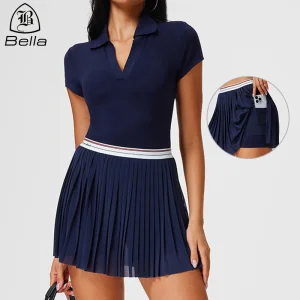
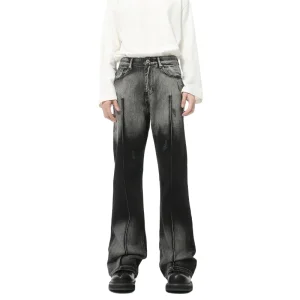
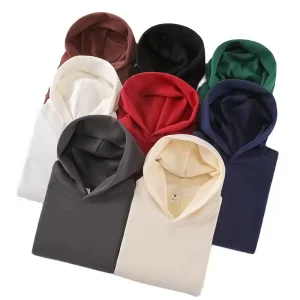
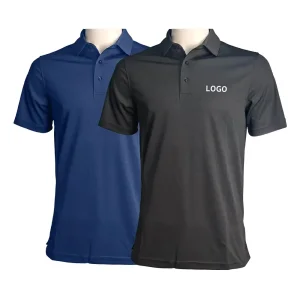
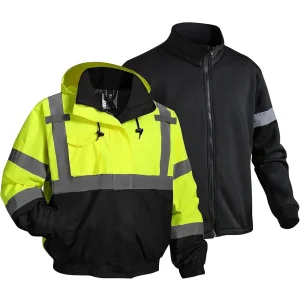
Direct from our manufacturing hubs—explore our top-performing outer shells, customized athletic gear, and performance workwear designed for ultimate resilience and tactical performance.
Evaluating the convergence of military-grade survivability and urban technical wear in a $4.8 Billion global market.
The global tactical apparel industry is experiencing a profound paradigm shift. What once served exclusively as specialized equipment for active-duty military and specialized law enforcement units has evolved into a key driver of the high-performance outerwear sector. Known widely as "Gorpcore" and "Techwear", the commercialization of tactical apparel now dominates both industrial procurement frameworks and retail fashion supply chains.
Today's professional tactical jackets are expected to meet strict military standards—such as NIR (Near-Infrared Radiation) signature reduction, flame retardancy (MIL-SPEC-like features), and high hydrostatic resistance—while maintaining comfort, breathability, and lightweight profiles. Factories and B2B buyers must navigate complex supply chain dynamics, including material sourcing restrictions, compliance testing, and geopolitical shifts affecting manufacturing hubs.
Projected market growth for technical tactical wear through 2030.
The standard baseline quality compliance for top-tier supply partners.
Behind the scenes of modern factory design—material science drives the innovation of professional outer shells.
Modern tactical jackets utilize expanded polytetrafluoroethylene (ePTFE) and thermoplastic polyurethane (TPU) membranes. These elements deliver a hydrostatic head rating exceeding 20,000mm and a Moisture Vapor Transmission Rate (MVTR) of 15,000 g/m²/24h. Dynamic thermal control ensures comfort in high-stress, high-exertion operations.
Integrating Cordura® woven nylon, ripstop grids, and high-tenacity polyester fibers ensures that shells can withstand abrasion tests (e.g., Martindale abrasion tests passing 100,000 rubs). Reinforcements are placed at critical friction zones like elbows, shoulders, and pockets to maximize service life.
Military-level suppliers integrate Near-Infrared (NIR) reflective dyes directly into fabric fibers during the solution dyeing stage. This prevents detection by night-vision devices. Anti-static and flame-retardant (Nomex/Kevlar blends) coatings are applied for extreme tactical and industrial settings.
Different environments and end-users demand vastly different technical configurations. How we adapt products to global market expectations.
Requires lightweight, ultra-breathable canvas weaves with advanced UV protection and low NIR signatures. Dustproof zippers and sand-filtration pockets are integrated to protect delicate optical and communications gear.
Configured with heavy loft insulations (such as PrimaLoft® or synthetic down alternatives) paired with wind-impermeable layers. Outer zippers are oversized to allow operation with heavy cold-weather mittens.
Optimized for modular accessory attachment (MOLLE-compatible webbing), concealable weapon access lines (side zippers), and hook-and-loop panels for agency insignia and identification patches.
Critical metrics for supply chain managers, procurement departments, and brand directors during audit processes.
Look for factories equipped with computer-guided fabric cutting beds, laser welding systems, and automated sealing machines. This ensures consistency across massive bulk orders and eliminates structural failures along seams.
Top-tier suppliers must pass international compliance standards. Ensure the facility is certified by BSCI, WRAP, or Sedex. These certifications verify that human resources, environmental impact, and wage policies meet international standards.
For high-value bids, material origins must be fully traceable. Working with factories that offer certified fabrics (such as OEKO-TEX® Standard 100 or bluesign® approved materials) ensures chemical safety compliance for all markets.
Adapting to modern sustainability frameworks without compromising battlefield-level garment reliability.
Using post-consumer plastic waste to spin high-performance tactical yarns. Reduces carbon footprint while matching the raw performance of virgin synthetics.
Moving away from PFCs (C8 chemistry) toward C6 and zero-fluorocarbon DWR coatings. Meets strict environmental regulations in North America and Western Europe.
Implementing 3D-molded component pockets, polymer reinforced panels, and customized zip pullers directly during the fabric lamination process.
Find answers to key technical questions and address procurement challenges in high-performance apparel manufacturing.
From modern protective gear to refined corporate tailoring. Review our extended line of high-performance B2B garments.
 VORA Fashion